





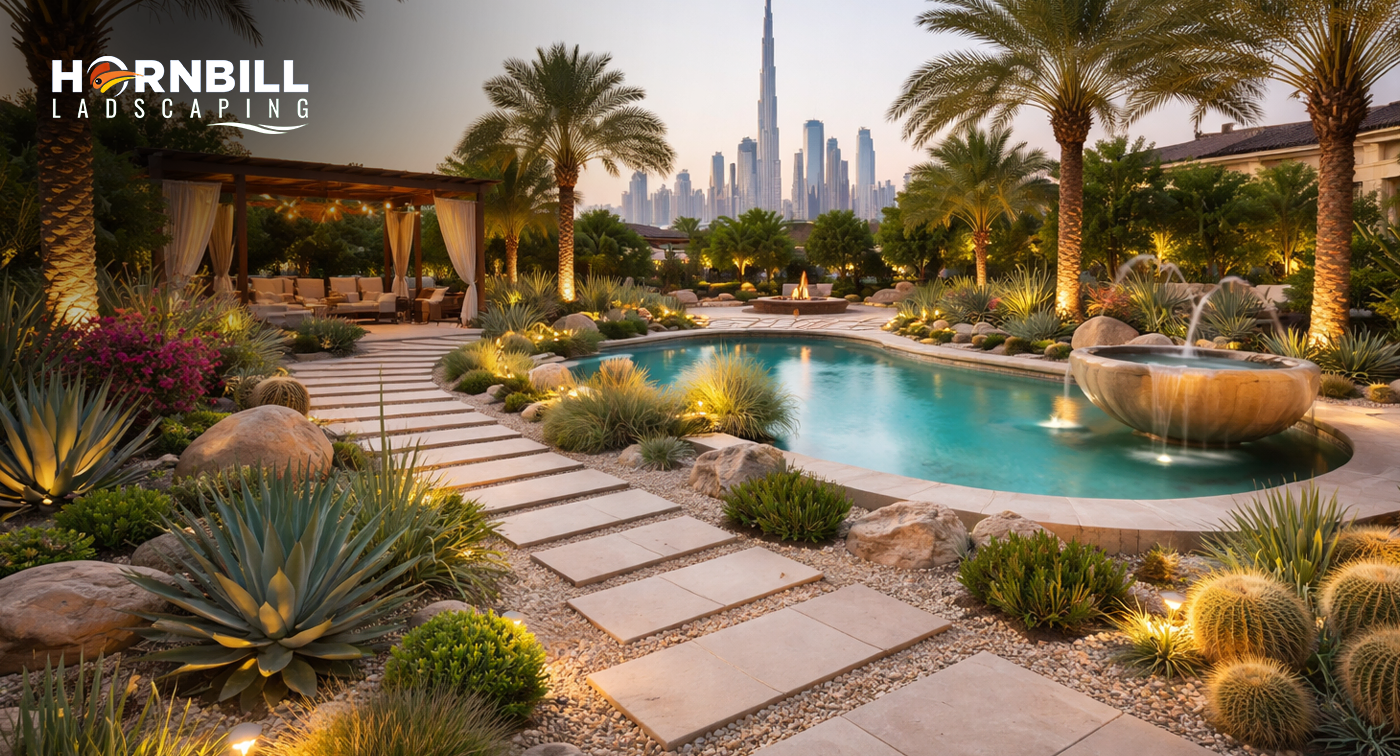
Dubai’s landscape is iconic — expansive sand dunes, dramatic sunlight, and a bold architectural skyline. Designing outdoor spaces in such an environment requires more than creativity. It demands technical expertise, climate awareness, and sustainable planning.
Desert landscaping in Dubai is not about fighting the climate — it is about working with it. In this ultimate guide, we explore practical strategies, plant selection, design styles, irrigation planning, and maintenance techniques that make desert landscaping successful and long-lasting.
Understanding Dubai’s Desert Climate
Before designing any outdoor space, it is essential to understand the environmental conditions.
Dubai experiences:
- Extremely high summer temperatures
- Intense sunlight exposure
- Low annual rainfall
- Sandy, nutrient-poor soil
- Occasional humidity near coastal areas
These factors significantly influence plant survival, irrigation systems, material selection, and overall landscape durability.
A successful desert landscape is built around climate-responsive design.
What is Desert Landscaping?
Desert landscaping is a design approach that focuses on:
- Drought-tolerant plants
- Efficient water use
- Heat-resistant materials
- Low-maintenance layouts
- Natural desert-inspired aesthetics
Rather than lush, water-intensive lawns, desert landscaping uses native and adaptive species combined with stone, gravel, and architectural elements to create visually appealing outdoor spaces.
Key Principles of Desert Landscaping in Dubai
1. Water Efficiency First
Water conservation is the foundation of desert landscaping.
Strategies include:
- Drip irrigation systems
- Smart irrigation controllers
- Mulching to reduce evaporation
- Grouping plants by water needs (hydrozoning)
Drip irrigation is especially effective because it delivers water directly to plant roots, reducing waste.
2. Choose the Right Plants
Plant selection determines long-term success. Native and drought-resistant plants thrive better in Dubai’s climate.
Popular desert-friendly plants include:
- Date palms
- Bougainvillea
- Desert roses
- Agave
- Aloe
- Lantana
- Ornamental grasses
These plants require minimal watering and tolerate high temperatures.
Avoid plants that demand constant moisture or shade unless you have a controlled irrigation system.
3. Reduce Lawn Areas
Traditional grass lawns consume large amounts of water and require intensive maintenance.
Instead, consider:
- Artificial turf for play areas
- Gravel beds
- Decorative pebbles
- Stone pathways
- Ground cover plants
Reducing lawn areas significantly lowers water consumption and maintenance costs.
4. Use Hardscaping Strategically
Hardscaping plays a major role in desert landscapes.
Examples include:
- Natural stone patios
- Pergolas
- Wooden decks
- Outdoor seating areas
- Decorative rock features
Hardscaping adds structure and reduces the need for water-dependent greenery.
Heat-resistant materials should always be selected to withstand Dubai’s summer conditions.
5. Provide Shade Solutions
Shade is essential for comfort and plant health.
Options include:
- Pergolas with climbing plants
- Shade sails
- Wooden gazebos
- Strategic tree placement
Shaded areas reduce heat absorption and create comfortable outdoor living spaces.
Popular Desert Landscaping Styles in Dubai
Modern Minimalist Desert Design
Characterized by:
- Clean geometric lines
- Neutral color palettes
- Structured plant placement
- Decorative gravel and stone
This style complements contemporary villas and commercial properties.
Natural Desert Oasis
Inspired by traditional desert environments, this style includes:
- Palm trees
- Sand-toned paving
- Rock formations
- Water features as focal points
It creates a resort-like atmosphere while remaining climate-appropriate.
Luxury Desert Landscaping
High-end properties often incorporate:
- Infinity pools
- Water walls
- Premium lighting
- Outdoor lounges
- Fire and water combinations
Luxury desert landscaping balances sustainability with elegance.
Soil Preparation and Improvement
Dubai’s sandy soil lacks nutrients and water retention capacity.
To improve plant growth:
- Add organic compost
- Use soil conditioners
- Install root barriers
- Apply mulch layers
Proper soil preparation ensures plant longevity and reduces irrigation frequency.
Smart Irrigation Systems
Technology plays a critical role in desert landscaping.
Modern systems include:
- Weather-based irrigation controllers
- Soil moisture sensors
- Zoned watering systems
- Automatic timers
These solutions optimize water usage and prevent overwatering.
Regular inspection of irrigation lines is essential to prevent leaks and blockages.
Outdoor Lighting for Desert Landscapes
Lighting enhances safety and aesthetics.
Desert-friendly lighting solutions include:
- LED pathway lights
- Uplighting for palm trees
- Wall-mounted fixtures
- Subtle garden accent lights
Energy-efficient LED lighting is recommended due to durability and low energy consumption.
Maintenance Tips for Desert Landscaping
Even low-maintenance landscapes require periodic care.
Maintenance includes:
- Seasonal pruning
- Irrigation system checks
- Pest control
- Mulch replacement
- Cleaning hardscape surfaces
Regular inspections prevent long-term damage caused by heat stress or irrigation faults.
Common Mistakes to Avoid
- Overwatering plants
- Choosing non-adapted plant species
- Ignoring soil preparation
- Installing poor-quality irrigation systems
- Overcrowding plant beds
Professional planning avoids these costly mistakes.
Benefits of Desert Landscaping in Dubai
- Reduced water consumption
- Lower maintenance costs
- Climate resilience
- Long-lasting plant health
- Enhanced property value
- Environmentally responsible design
Desert landscaping is not only sustainable — it is economically practical.
Why Professional Landscaping Matters
Desert landscaping requires:
- Technical knowledge
- Climate expertise
- Irrigation planning
- Material durability understanding
- Design creativity
Professional landscapers ensure that your outdoor space is both visually stunning and functionally sustainable.
Final Thoughts
Desert landscaping in Dubai is about embracing the environment rather than resisting it. By choosing drought-tolerant plants, efficient irrigation systems, heat-resistant materials, and smart design strategies, you can create an outdoor space that is beautiful, sustainable, and low-maintenance.
Whether you are designing a villa garden, commercial property landscape, or luxury outdoor retreat, professional planning ensures long-term success.
For expert desert landscaping solutions in Dubai, choose Hornbill Landscaping. Our team combines innovative design with climate-smart strategies to create outdoor spaces that thrive in desert conditions. Contact Hornbill Landscaping today to transform your vision into reality.